
Certificate of Lawfulness in
Stanley
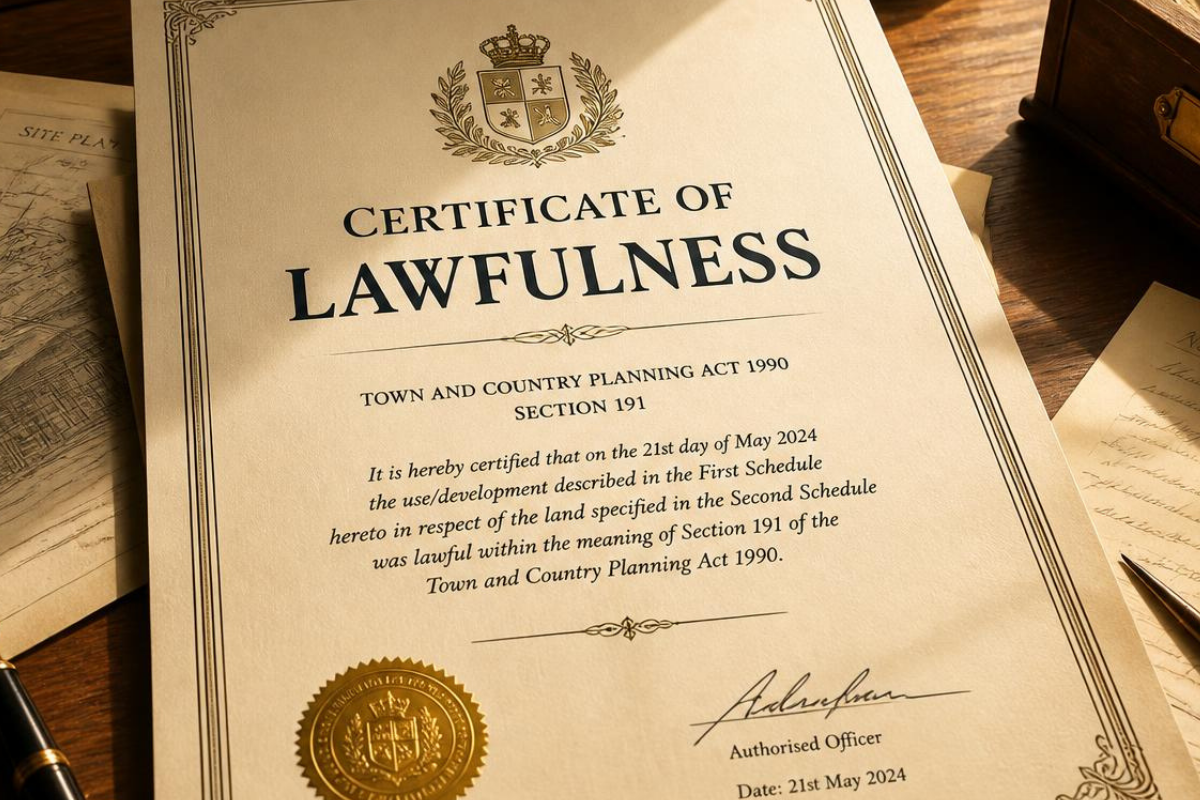
Not every Stanley property matches its paperwork. Where something’s been built or used a certain way for long enough without challenge, it can become immune from enforcement entirely – a Certificate of Lawfulness makes that legally official. We assess whether your situation genuinely meets the threshold.
Get Your Free Eligibility CheckExisting Or Proposed – What Stanley Needs To Know
People in Stanley often assume that because something’s been in place a long time, it’s automatically fine – but immunity from enforcement isn’t automatic, it has to be formally confirmed through a Certificate of Lawfulness, and that confirmation depends entirely on the strength of the evidence presented.
Property sales in Stanley are a genuinely common trigger for this – a conveyancing solicitor spots an undocumented alteration and won’t proceed until its lawful status is confirmed, putting real time pressure on getting the certificate right.
Rather than assuming your Stanley situation automatically qualifies, we assess the actual timeline and evidence available first, so you know your genuine chances before applying.
Free Eligibility Check
Confirms whether you genuinely qualify
Existing Or Proposed
CLEUD or CLOPUD, correctly identified
Evidence Prepared
Built to satisfy the council’s evidence test
Fast Turnaround
Applications moved along quickly
How We Help in Stanley
Working out which certificate actually applies to Stanley – existing use or proposed – and whether the situation genuinely meets the relevant legal threshold comes first, before anything else.
From there, we help gather and organise the evidence your Stanley application needs – dated documentation, statutory declarations, anything that builds a clear, defensible timeline for the council to assess.
Stanley certificate applications don’t get left to sit once submitted – any additional evidence the council asks for gets addressed without delay.
Getting Stanley Certificates Right The First Time
Every Stanley situation has its own evidence trail, and generic advice can’t account for what’s actually documented versus what would need to be gathered. We check the real picture first.
We build every Stanley evidence case around what the council’s specific test requires, rather than assuming more paperwork automatically means a stronger application.
Property transactions in Stanley often bring real time pressure – a solicitor flagging an issue days before completion. We understand that urgency and work accordingly, without cutting corners on the evidence itself.
Get Your Free Eligibility Check
Certificate of Lawfulness FAQs for Stanley
Do I need a CLEUD or a CLOPUD for my Stanley situation?
It depends whether the work or use in Stanley has already happened – existing situations need a CLEUD, while something you’re planning but haven’t started needs a CLOPUD.
What is the four-year rule for a Stanley Certificate of Lawfulness?
The four-year rule in Stanley applies specifically to building operations and changes of use to use as a single dwelling – other changes of use typically need ten years instead.
Which changes of use need ten years in Stanley?
If your Stanley situation isn’t building work or a single dwelling use change, the ten-year rule most likely applies – we confirm which threshold your specific case needs.
What evidence do I need for a Stanley Certificate of Lawfulness?
Dated photographs, utility bills, tenancy agreements, and statutory declarations from neighbours or previous owners are all common evidence types for Stanley applications, building a clear continuous timeline.
Will an undocumented extension delay my Stanley house sale?
A Stanley sale can genuinely stall once a solicitor spots something undocumented – sorting the certificate proactively avoids that hold-up entirely.
Do I pay anything before the Stanley evidence review starts?
The Stanley eligibility check comes at no cost – your realistic chances are clear well before any formal application gets underway.