
Certificate of Lawfulness in
Newmarket (Suffolk)
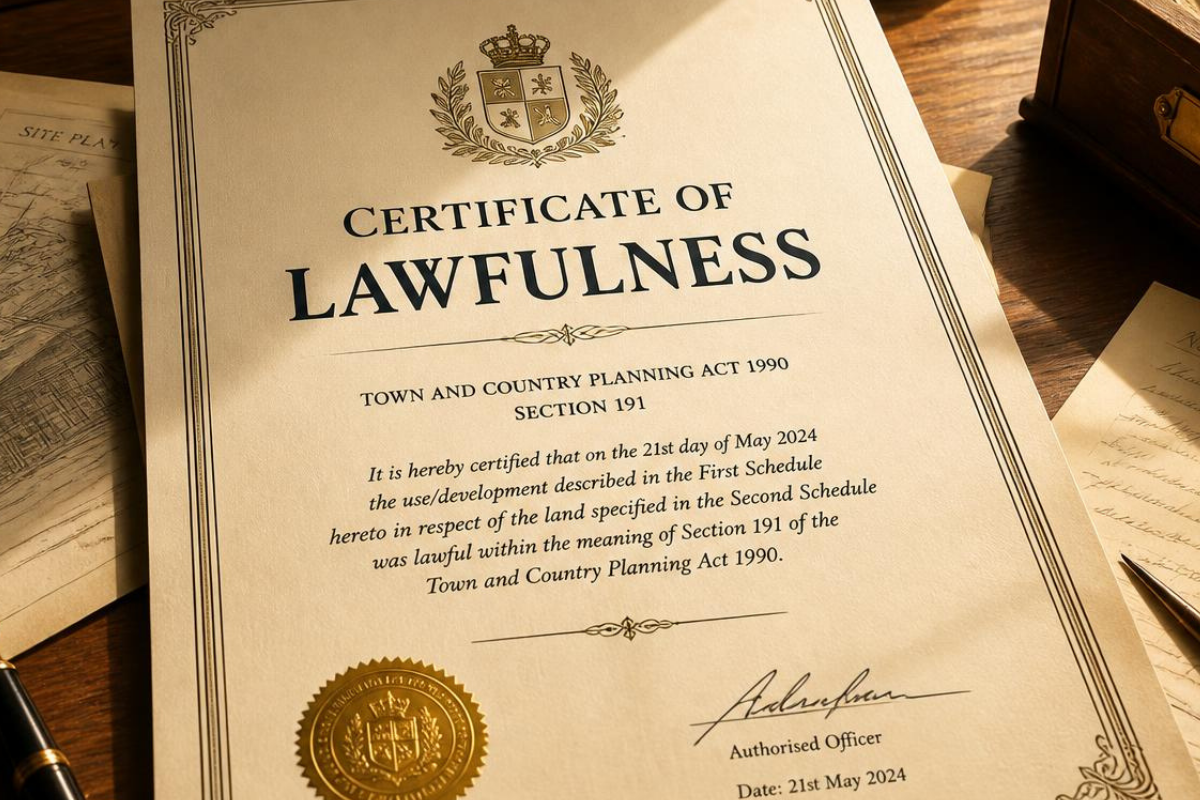
Selling a Newmarket property with an undocumented loft conversion, or remortgaging one with a change of use nobody ever formalised, often stalls on exactly this question – is it actually lawful? A Certificate of Lawfulness answers that definitively, provided the evidence stacks up.
Get Your Free Eligibility CheckUnderstanding The Evidence Test For Newmarket
People in Newmarket often assume that because something’s been in place a long time, it’s automatically fine – but immunity from enforcement isn’t automatic, it has to be formally confirmed through a Certificate of Lawfulness, and that confirmation depends entirely on the strength of the evidence presented.
Property sales in Newmarket are a genuinely common trigger for this – a conveyancing solicitor spots an undocumented alteration and won’t proceed until its lawful status is confirmed, putting real time pressure on getting the certificate right.
Every Newmarket enquiry gets an honest read on whether the relevant time period has genuinely passed and what evidence can realistically support it, before we recommend anything further.
Free Eligibility Check
Confirms whether you genuinely qualify
Existing Or Proposed
CLEUD or CLOPUD, correctly identified
Evidence Prepared
Built to satisfy the council’s evidence test
Fast Turnaround
Applications moved along quickly
How We Help in Newmarket (Suffolk)
Working out which certificate actually applies to Newmarket – existing use or proposed – and whether the situation genuinely meets the relevant legal threshold comes first, before anything else.
From there, we help gather and organise the evidence your Newmarket application needs – dated documentation, statutory declarations, anything that builds a clear, defensible timeline for the council to assess.
After submission, your Newmarket application stays on our radar – any council queries about the evidence get handled directly rather than left for you to manage.
The Evidence-First Approach For Newmarket
If your Newmarket evidence genuinely isn’t strong enough yet, we’ll say so plainly – not submit a weak application anyway and hope the council doesn’t notice.
Every piece of evidence we help gather for a Newmarket application is assessed for whether it genuinely supports the timeline, not just included to pad out the submission.
We know a Newmarket Certificate of Lawfulness often matters for reasons beyond the property itself – a sale falling through, a mortgage application stalling – and we work with that reality in mind.
Get Your Free Eligibility Check
Certificate of Lawfulness FAQs for Newmarket
Do I need a CLEUD or a CLOPUD for my Newmarket situation?
It depends whether the work or use in Newmarket has already happened – existing situations need a CLEUD, while something you’re planning but haven’t started needs a CLOPUD.
What is the four-year rule for a Newmarket Certificate of Lawfulness?
The four-year rule in Newmarket applies specifically to building operations and changes of use to use as a single dwelling – other changes of use typically need ten years instead.
Which changes of use need ten years in Newmarket?
If your Newmarket situation isn’t building work or a single dwelling use change, the ten-year rule most likely applies – we confirm which threshold your specific case needs.
What counts as proof for a Newmarket application?
Strong Newmarket evidence establishes an unbroken, dated timeline – the specific mix depends on your situation, which is exactly what your free eligibility check assesses.
Do I need a Certificate of Lawfulness to sell my Newmarket property?
A Newmarket sale can genuinely stall once a solicitor spots something undocumented – sorting the certificate proactively avoids that hold-up entirely.
Do I pay anything before the Newmarket evidence review starts?
Yes, the Newmarket eligibility check costs nothing – you’ll know whether your situation genuinely qualifies long before fees ever come into it.