
Certificate of Lawfulness in
Long Ditton
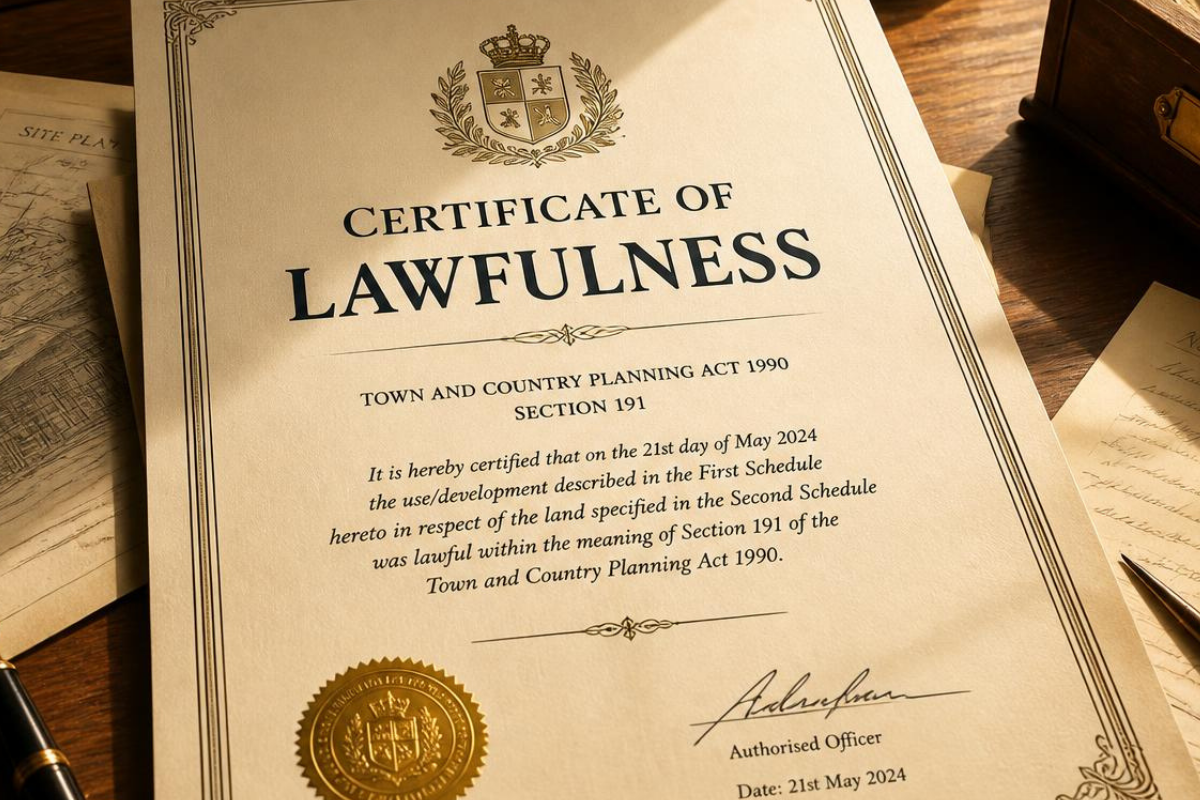
Not every Long Ditton property matches its paperwork. Where something’s been built or used a certain way for long enough without challenge, it can become immune from enforcement entirely – a Certificate of Lawfulness makes that legally official. We assess whether your situation genuinely meets the threshold.
Get Your Free Eligibility CheckExisting Or Proposed – What Long Ditton Needs To Know
Long Ditton councils don’t grant a Certificate of Lawfulness on your word alone – they need proper evidence the relevant time period has genuinely passed: dated photographs, utility bills, tenancy agreements, statutory declarations from neighbours, anything that establishes a clear, continuous timeline.
Get the evidence wrong or incomplete in Long Ditton and the application gets refused, which is a real cost with nothing to show for it. Getting it right the first time means understanding exactly what the council’s evidence test actually requires.
Every Long Ditton enquiry gets an honest read on whether the relevant time period has genuinely passed and what evidence can realistically support it, before we recommend anything further.
Free Eligibility Check
Confirms whether you genuinely qualify
Existing Or Proposed
CLEUD or CLOPUD, correctly identified
Evidence Prepared
Built to satisfy the council’s evidence test
Fast Turnaround
Applications moved along quickly
How We Help in Long Ditton
Working out which certificate actually applies to Long Ditton – existing use or proposed – and whether the situation genuinely meets the relevant legal threshold comes first, before anything else.
From there, we help gather and organise the evidence your Long Ditton application needs – dated documentation, statutory declarations, anything that builds a clear, defensible timeline for the council to assess.
Because Long Ditton councils can query specific evidence points during determination, we remain available throughout to clarify or supplement whatever’s needed.
The Evidence-First Approach For Long Ditton
Every Long Ditton situation has its own evidence trail, and generic advice can’t account for what’s actually documented versus what would need to be gathered. We check the real picture first.
Every piece of evidence we help gather for a Long Ditton application is assessed for whether it genuinely supports the timeline, not just included to pad out the submission.
Whether your Long Ditton situation is driven by a sale, a remortgage, or simple peace of mind, we treat the evidence requirement with the same rigour regardless of the underlying reason.
Get Your Free Eligibility Check
Certificate of Lawfulness FAQs for Long Ditton
Do I need a CLEUD or a CLOPUD for my Long Ditton situation?
A Certificate of Lawfulness for Existing Use or Development (CLEUD) confirms something already in place in Long Ditton is lawful, while a Certificate for a Proposed Use or Development (CLOPUD) confirms something not yet started won’t need planning permission.
What is the four-year rule for a Long Ditton Certificate of Lawfulness?
The four-year rule in Long Ditton applies specifically to building operations and changes of use to use as a single dwelling – other changes of use typically need ten years instead.
What is the ten-year rule and does it apply to my Long Ditton situation?
If your Long Ditton situation isn’t building work or a single dwelling use change, the ten-year rule most likely applies – we confirm which threshold your specific case needs.
What evidence do I need for a Long Ditton Certificate of Lawfulness?
Dated photographs, utility bills, tenancy agreements, and statutory declarations from neighbours or previous owners are all common evidence types for Long Ditton applications, building a clear continuous timeline.
Will an undocumented extension delay my Long Ditton house sale?
A Long Ditton sale can genuinely stall once a solicitor spots something undocumented – sorting the certificate proactively avoids that hold-up entirely.
Do I pay anything before the Long Ditton evidence review starts?
Yes, the Long Ditton eligibility check costs nothing – you’ll know whether your situation genuinely qualifies long before fees ever come into it.