
Certificate of Lawfulness in
Eton
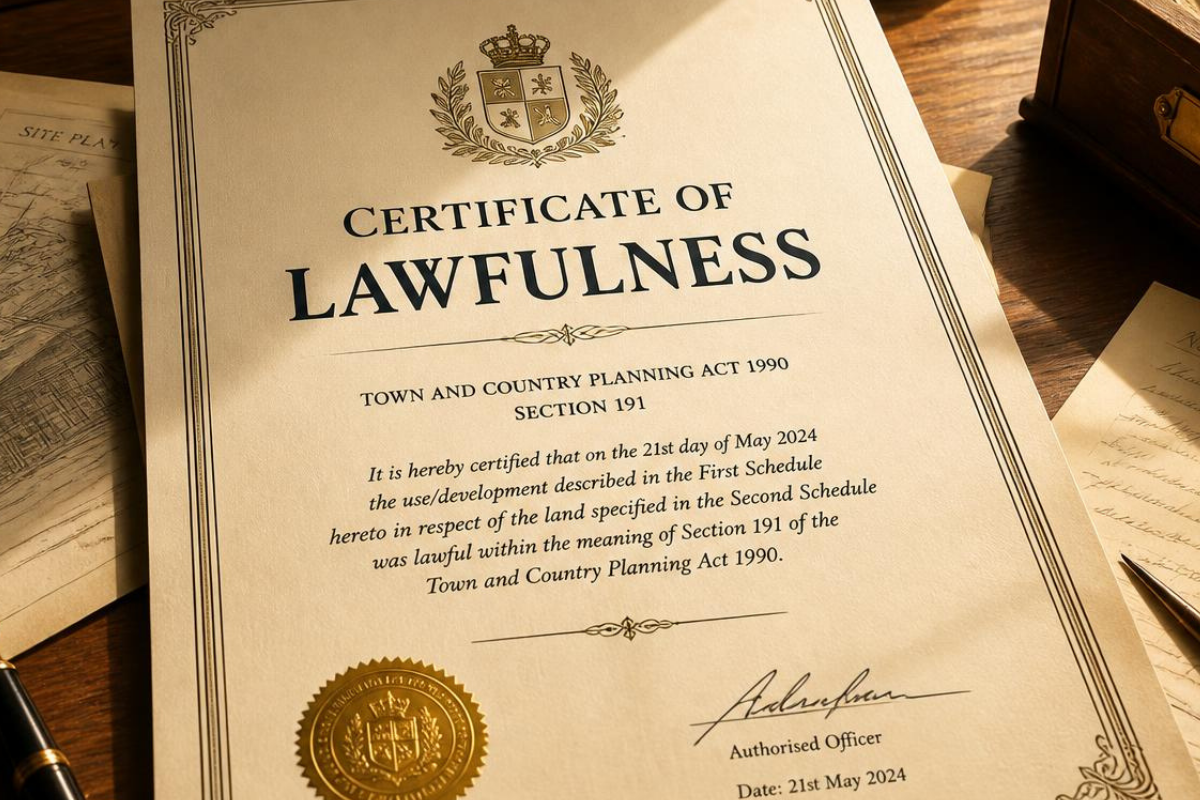
Not every Eton property matches its paperwork. Where something’s been built or used a certain way for long enough without challenge, it can become immune from enforcement entirely – a Certificate of Lawfulness makes that legally official. We assess whether your situation genuinely meets the threshold.
Get Your Free Eligibility CheckUnderstanding The Evidence Test For Eton
Eton councils don’t grant a Certificate of Lawfulness on your word alone – they need proper evidence the relevant time period has genuinely passed: dated photographs, utility bills, tenancy agreements, statutory declarations from neighbours, anything that establishes a clear, continuous timeline.
Get the evidence wrong or incomplete in Eton and the application gets refused, which is a real cost with nothing to show for it. Getting it right the first time means understanding exactly what the council’s evidence test actually requires.
Rather than assuming your Eton situation automatically qualifies, we assess the actual timeline and evidence available first, so you know your genuine chances before applying.
Free Eligibility Check
Confirms whether you genuinely qualify
Existing Or Proposed
CLEUD or CLOPUD, correctly identified
Evidence Prepared
Built to satisfy the council’s evidence test
Fast Turnaround
Applications moved along quickly
How We Help in Eton
Eton cases get weighed against the real legal threshold first – four years or ten, depending on what’s involved – before any application work begins.
From there, we build the evidence case your Eton certificate genuinely needs, prepared to withstand proper scrutiny rather than assembled as an afterthought.
Because Eton councils can query specific evidence points during determination, we remain available throughout to clarify or supplement whatever’s needed.
The Evidence-First Approach For Eton
If your Eton evidence genuinely isn’t strong enough yet, we’ll say so plainly – not submit a weak application anyway and hope the council doesn’t notice.
Eton applications succeed or fail on evidence quality, not quantity – we focus on what actually proves continuous, unchallenged use, not a folder of loosely related documents.
Whether your Eton situation is driven by a sale, a remortgage, or simple peace of mind, we treat the evidence requirement with the same rigour regardless of the underlying reason.
Get Your Free Eligibility Check
Certificate of Lawfulness FAQs for Eton
What’s the difference between existing and proposed certificates in Eton?
A Certificate of Lawfulness for Existing Use or Development (CLEUD) confirms something already in place in Eton is lawful, while a Certificate for a Proposed Use or Development (CLOPUD) confirms something not yet started won’t need planning permission.
Does my extension qualify under the four-year rule in Eton?
Building work or a change of use to a single dwelling in Eton generally becomes immune from enforcement after four years of continuous, unchallenged existence – though proving this requires genuine supporting evidence.
Which changes of use need ten years in Eton?
If your Eton situation isn’t building work or a single dwelling use change, the ten-year rule most likely applies – we confirm which threshold your specific case needs.
What counts as proof for a Eton application?
Strong Eton evidence establishes an unbroken, dated timeline – the specific mix depends on your situation, which is exactly what your free eligibility check assesses.
Will an undocumented extension delay my Eton house sale?
Often yes – a conveyancing solicitor in Eton may flag an undocumented alteration and require formal confirmation of its lawful status before the sale can proceed.
Do I pay anything before the Eton evidence review starts?
Yes, the Eton eligibility check costs nothing – you’ll know whether your situation genuinely qualifies long before fees ever come into it.