
Certificate of Lawfulness in
Dover
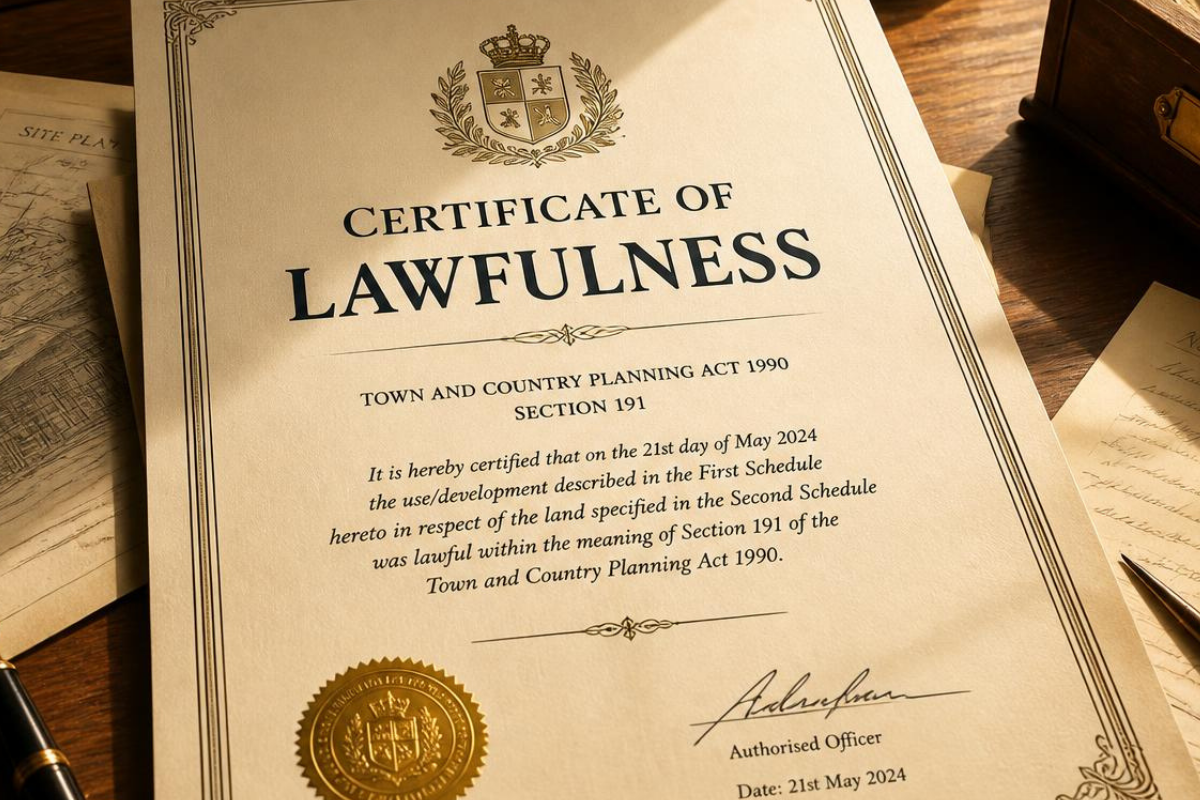
An extension built years ago in Dover without formal permission, or a use that’s continued unchallenged for a decade, can become genuinely lawful over time – but only with the right evidence and the right certificate. We check whether your specific situation in Dover actually qualifies before you apply for anything.
Get Your Free Eligibility CheckExisting Or Proposed – What Dover Needs To Know
Dover councils don’t grant a Certificate of Lawfulness on your word alone – they need proper evidence the relevant time period has genuinely passed: dated photographs, utility bills, tenancy agreements, statutory declarations from neighbours, anything that establishes a clear, continuous timeline.
Get the evidence wrong or incomplete in Dover and the application gets refused, which is a real cost with nothing to show for it. Getting it right the first time means understanding exactly what the council’s evidence test actually requires.
Every Dover enquiry gets an honest read on whether the relevant time period has genuinely passed and what evidence can realistically support it, before we recommend anything further.
Free Eligibility Check
Confirms whether you genuinely qualify
Existing Or Proposed
CLEUD or CLOPUD, correctly identified
Evidence Prepared
Built to satisfy the council’s evidence test
Fast Turnaround
Applications moved along quickly
How We Help in Dover
Dover properties get the actual history worked out first – what’s in place, since when, and what documentation already exists to support that timeline.
Once that’s clear, we prepare your Dover application specifically around what this council’s evidence test requires, rather than a generic submission that might fall short.
After submission, your Dover application stays on our radar – any council queries about the evidence get handled directly rather than left for you to manage.
The Evidence-First Approach For Dover
Getting a Dover Certificate of Lawfulness refused because the evidence wasn’t strong enough is a genuinely costly mistake – we assess realistic chances honestly before you commit to a formal application.
Every piece of evidence we help gather for a Dover application is assessed for whether it genuinely supports the timeline, not just included to pad out the submission.
Property transactions in Dover often bring real time pressure – a solicitor flagging an issue days before completion. We understand that urgency and work accordingly, without cutting corners on the evidence itself.
Get Your Free Eligibility Check
Certificate of Lawfulness FAQs for Dover
What’s the difference between existing and proposed certificates in Dover?
It depends whether the work or use in Dover has already happened – existing situations need a CLEUD, while something you’re planning but haven’t started needs a CLOPUD.
What is the four-year rule for a Dover Certificate of Lawfulness?
Building work or a change of use to a single dwelling in Dover generally becomes immune from enforcement after four years of continuous, unchallenged existence – though proving this requires genuine supporting evidence.
Which changes of use need ten years in Dover?
Most other changes of use, and breaches of planning condition, in Dover require ten years of continuous, unchallenged existence before becoming immune from enforcement, rather than the shorter four-year threshold.
What evidence do I need for a Dover Certificate of Lawfulness?
Dated photographs, utility bills, tenancy agreements, and statutory declarations from neighbours or previous owners are all common evidence types for Dover applications, building a clear continuous timeline.
Will an undocumented extension delay my Dover house sale?
A Dover sale can genuinely stall once a solicitor spots something undocumented – sorting the certificate proactively avoids that hold-up entirely.
Is the eligibility check free for Dover Certificate of Lawfulness enquiries?
The Dover eligibility check comes at no cost – your realistic chances are clear well before any formal application gets underway.